
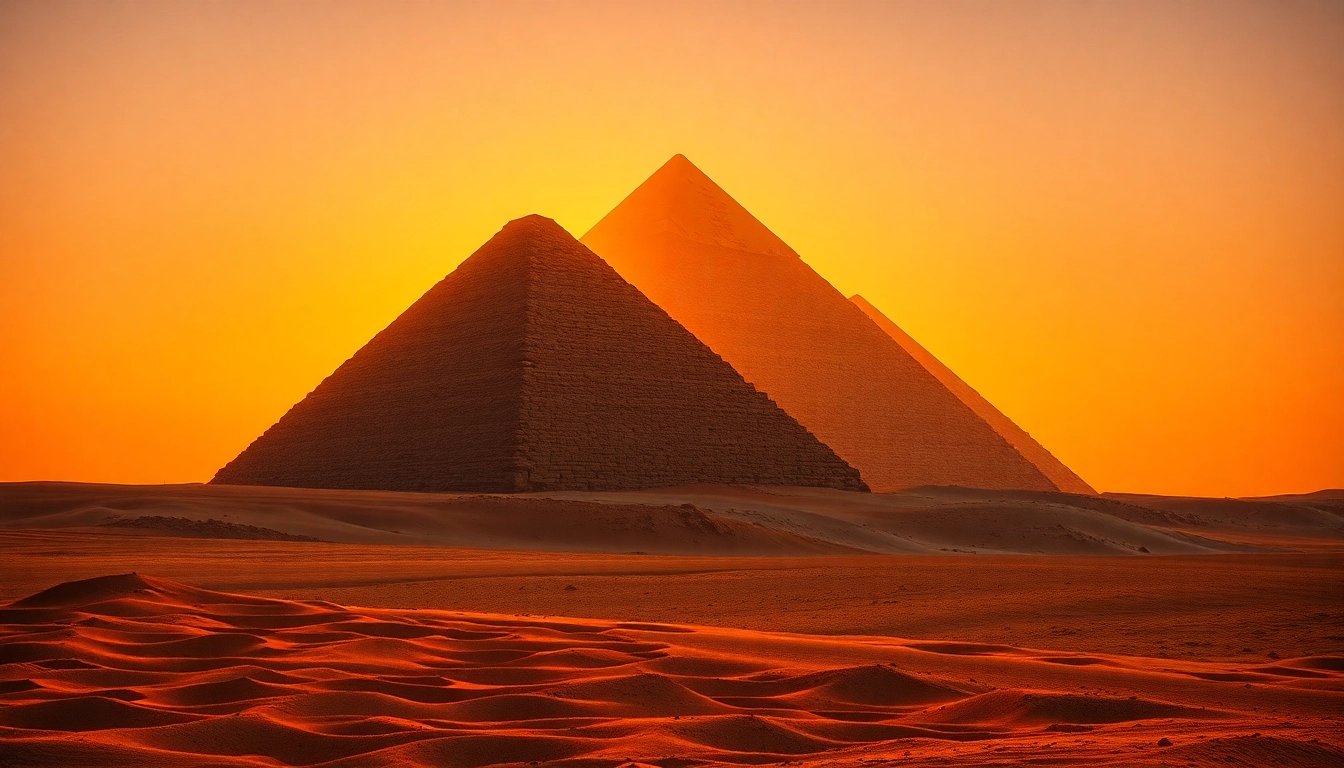
Understanding the Construction of the Great Pyramid of Giza
The Great Pyramid of Giza stands as an enduring symbol of ancient engineering, showcasing a marvel of architectural prowess that has engaged scholars and enthusiasts alike for centuries. Its construction, which took place during the Fourth Dynasty of the Old Kingdom of Egypt, is a topic rich with inquiry and speculation, contributing to our understanding of ancient Egyptian civilization. Visitors can explore further details about this iconic structure at https://piraminds.com/.
Materials Used in Pyramid Construction
The primary materials used in the construction of the Great Pyramid of Giza were limestone, granite, and mortar. The core of the pyramid is made predominantly from local limestone, which was quarried from Giza itself. These blocks were then cut into precise shapes and transported to the pyramid site. For the outer casing, higher quality limestone was used, polished to create a brilliant white surface that would reflect the sun’s light.
Granite, quarried from Aswan—located over 800 kilometers south of Giza—was utilized in the pyramid’s inner chambers. This tougher material was primarily used due to its durability and aesthetic appeal. Mortar was employed to bind the stones together, although its precise composition remains the subject of research.
Techniques Employed by Ancient Egyptians
The construction of the pyramid involved sophisticated techniques that showcased the remarkable ingenuity of the ancient Egyptians. One of the most widely accepted theories suggests that the massive stone blocks were transported using sledges, likely lubricated with water to reduce friction. Additionally, ramps made of mudbrick or limestone were constructed to elevate the stones to the necessary heights.
The organization of labor was crucial for the pyramid’s successful completion. A workforce of skilled laborers, architects, and engineers was mobilized, demonstrating a highly organized system. Contrary to popular belief, many of these laborers were not slaves but rather paid workers who labored in rotating shifts.
Innovations Behind the Pyramid’s Structure
The Great Pyramid is not only a testament to the architectural capabilities of its builders but also an example of ingenuity in navigating challenges such as load distribution and structural integrity. Innovations in building techniques included the development of corbel arches in the burial chamber, allowing for the distribution of weight above without fear of collapse.
Another significant innovation was the use of straight edges and angles, creating a precise geometric form that has allowed the pyramid to withstand the test of time. The employment of the golden ratio in the pyramid’s design further illustrates the advanced understanding of mathematics present in ancient Egypt.
Historical Significance of the Pyramid
The Great Pyramid of Giza serves as more than just a tomb; it reflects the historical and cultural context of ancient Egypt and the pharaohs who ruled during its construction.
The Role of the Pharaohs
The Great Pyramid was built as a tomb for Pharaoh Khufu, also known as Cheops. This structure symbolized the divine power and authority of the pharaoh, believed to be a god on Earth. The pyramid acted as a burial site and a means for the pharaoh’s journey to the afterlife. It encapsulated the belief system of the Egyptians regarding death and the afterlife, reinforcing the importance of the pharaoh’s role in society.
Cultural Impact on Ancient Egypt
Beyond its role as a royal tomb, the Great Pyramid had a profound cultural impact on ancient Egyptian civilization. It became a focal point of religious and cultural practices, embodying the Egyptians’ skills in mathematics, astronomy, and architecture. The construction of the pyramid set a precedent for future royal tombs and monumental architecture, influencing subsequent dynasties.
Connection to Egyptian Mythology
Egyptian mythology deeply influenced the design and purpose of the Great Pyramid. It was aligned with the stars, symbolizing the pharaoh’s ascension to the divine. The pyramid’s structure is believed to represent the rays of the sun, signifying a connection between the material world and the divine.
Exploring the Mysteries of the Pyramid
The Great Pyramid is shrouded in mystery, with many questions existing about its purpose, construction, and the secrets it holds.
Unsolved Questions About Its Purpose
The purpose of the Great Pyramid extends beyond that of a mere tomb. Scholars continue to debate several theories, including its potential role as an astronomical observatory or a powerful symbol of the state’s ideological role. Some propose that its layout was intentional to align with significant celestial events.
Recent Discoveries and Findings
Advancements in technology have led to exciting discoveries regarding the Great Pyramid. Recent studies utilizing non-invasive technology, including muon radiography, have revealed voids within the structure that are yet to be fully understood. These findings have opened new avenues for research into how the pyramid was constructed and the purposes of these hidden chambers.
Theories Surrounding its Construction
The construction theories surrounding the Great Pyramid are diverse. Some historians suggest that a straight or zigzagging ramp was utilized to transport the massive stones, while others posit that circular ramps might have been used to build it in a spiral form. Each theory attempts to reconcile the incredible feat of engineering accomplished by the ancient Egyptians.
Visiting the Great Pyramid of Giza
The Great Pyramid remains one of the most visited attractions globally. While visiting, it is essential to make the most of your experience.
Essential Tips for Tourists
Visiting the Great Pyramid can be awe-inspiring. Plan ahead by booking tickets online to avoid long queues. Wear comfortable shoes as exploring the sands and climbing the pyramids can be demanding. Consider joining guided tours, which provide in-depth knowledge and access to lesser-known areas.
Best Time to Visit
The best times to visit Egypt and the Great Pyramid are during the spring (March to May) and fall (September to November). During these months, the temperatures are milder, making for a more enjoyable experience. Avoiding summer months is advised due to extreme heat.
Nearby Attractions and Activities
Combine your visit to the Great Pyramid with other nearby attractions, such as the Sphinx, the Solar Boat Museum, and the surrounding pyramids at Giza, including those of Khafre and Menkaure. Guided tours can facilitate access to these sites, ensuring an enriching experience.
Frequently Asked Questions about the Great Pyramid
How was the Great Pyramid constructed?
The Great Pyramid was built using local limestone, granite, and mortar, employing advanced techniques, including sledges and ramps, to transport and elevate stones.
What materials were used in its construction?
The pyramid primarily consists of limestone for the core, high-quality limestone casing, and granite for the inner chambers, forming a robust structure.
Why is the Great Pyramid significant?
The Great Pyramid symbolizes ancient Egyptian engineering feats, reflecting the civilization’s cultural values, beliefs in the afterlife, and pharaonic power.
Are there any hidden chambers within the pyramid?
Recent studies have utilized technology to identify voids and potential hidden chambers within the Great Pyramid, the purpose of which remains the subject of ongoing research.
How can I visit the Great Pyramid of Giza?
Tourists can visit the Great Pyramid by booking tickets online. Guided tours can enhance the experience by providing detailed insights and access to key points of interest.